
Every child has the right to a full-time education. Regular school attendance is essential for helping children make the most of their learning, achieve their potential and develop the skills they need for later life. The Department for Education (DfE) recognises that being in school supports not only educational achievement, but also children’s wellbeing, wider development and future opportunities.
The Benefits of Good Attendance
Attending school regularly helps children to:
- Achieve their full academic potential.
- Develop confidence and independence.
- Build positive relationships and friendships.
- Develop communication and social skills.
- Participate in school activities and wider opportunities.
- Establish routines and positive habits for later life.
- Prepare for further education, employment and training.
Being in school every day helps children stay connected to learning, their peers and the wider life of the school community. It also provides access to trusted adults and the support that schools can offer when challenges arise.
What is Good Attendance?
We always aim for 100% attendance, giving children the maximum opportunity to benefit from their education.
We recognise that for some children, attendance may be affected by factors such as illness, disability, special educational needs or other individual circumstances. In these situations, schools will work with families to provide appropriate support and help children achieve the highest level of attendance possible.
How is Attendance Calculated?
Schools record attendance twice each day:
- Once during the morning session.
- Once during the afternoon session.
This means there are 10 attendance sessions each week.
Attendance is calculated by comparing the number of sessions a child attends against the number of sessions they were expected to attend. This is then expressed as a percentage.
For example:
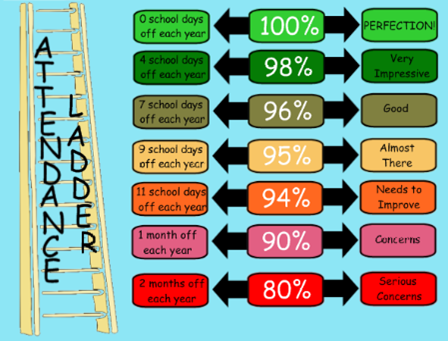
What is Persistent Absence?
Children whose attendance falls to 90% or below are considered to be persistently absent.
Whilst 90% attendance may sound high, it means a child is missing around 19 school days over the course of an academic year. This can have a significant impact on learning, progress and a child’s ability to keep up with their peers.
The Impact of Missing School
Research consistently shows a strong link between attendance and attainment. Missing school can affect a child’s academic progress, confidence and readiness to learn. The DfE highlights that children who miss significant amounts of school are less likely to achieve expected outcomes in English and mathematics and are at greater risk of poorer long-term educational outcomes.
Poor attendance can also impact:
- Friendships and social development.
- Emotional wellbeing.
- Participation in school activities and experiences.
- Access to support services available through school.
- Future education, employment and training opportunities.
We Are Here to Help
We understand that there can be many reasons why attendance becomes difficult. Schools, families and the Attendance Support Team work together to identify barriers to attendance and provide the right support at the right time.
If you have concerns about your child’s attendance, speak to your child’s school as early as possible. Early support can often prevent attendance difficulties from becoming more significant concerns. The DfE’s attendance guidance emphasises the importance of schools and families working together to understand and address barriers to attendance.
Further Information
- Attendance and the Law
- Attendance interventions
- Absence Due to Illness
- Improving Attendance
- Furtherl Resources
- Frequently Asked Questions (FAQs)
If you need support with your child’s attendance, please contact your child’s school in the first instance. Schools and the Attendance Support Team are committed to working with families to help every child attend regularly and thrive in education.